Academy curriculum junior high school language courses publications publishing textbooks
by sendaiben

5 comments
The Fluency Course 1 Video
Component Introduction
I promised to make a video introducing the Fluency Course materials for people considering helping us trial it.
So, er, here it is. Please forgive the shakiness, I was holding the camera in one hand and manipulating the materials with the other 🙂
Here is the full list of materials:
- Question Cards: 20 per month, you need one set for each two students in the class
- Reference Sheet: one per student per month
- Workbook: one per student
- Textbook: one per student
- Record Sheet: one per student per four months
- Verb answer sheets: one for every one or two students
I hope you found that useful. Please let me know if you have any questions or comments!
Academy curriculum JHS junior high school language courses materials
by sendaiben
4 comments
The Junior High School Fluency Course
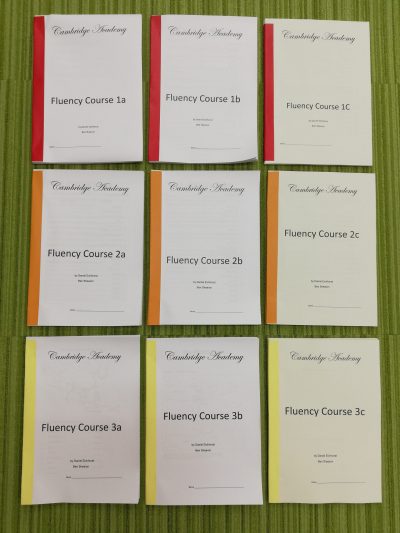
Need test partners from April 2020
After five years of writing, testing, and editing, we finally finished writing the final volume of the Fluency Course last November. You can read more about the course in the previous post.
It’s been a wonderful experience working with my writing partner Dan E. and testing the materials with students at Cambridge English.
Now we are ready to take the next step.
The next step is to test the materials. We need to find out if they will work as well for other people as they do for us. We also need to find all the mistakes that inevitably lurk within the 100,000 words of content in the course 🙂
Another question is whether the materials work if students are not doing extensive reading alongside them. I suspect they will, but would feel better having actual data.
So we are looking for a few schools that would be willing to test the materials with their students from next April. It might be a bit difficult to jump into the later stages of the course, so we are only hoping to test the year one content (matches JHS first year textbooks and school curricula).
The materials
The Fluency Course consists of a number of components. It is designed to be modular, so schools/teachers can choose which elements to use with their students. The various elements are somewhat independent from each other.
- the Fluency Coursebook contains vocabulary quizzes, reading/listening/speed reading texts, verb drills, verb quizzes, and dialogues (there may be audio files for each text, but these are not ready at time of writing)
- the Speaking Cards contain questions and model answers for speaking practice
- the Fluency Workbook contains question and answer writing practice
- the Record Sheets allow students to write their scores and times and keep track of their progress
- the monthly Reference Sheets show all vocabulary and questions for that month along with Japanese translations
- the Quizlet data sets contain vocabulary and questions that match each week of the course so that students can preview before class
The Fluency Course has 48 units, organized four to a month. The first volume of the first-year course (1a) is the easiest. The second volume (1b) is slightly harder and the third (1c) harder still. At Cambridge English we only have 44 classes a year, so we just skip the units that fall on days the school is shut.
Test partners
We would expect test partners to:
- have a number of (first year) junior high school students
- have weekly 60m+ classes
- test the materials and give us feedback
- pay a nominal fee per student to cover the cost of materials
- understand that materials are in development and thus not ‘pretty’
The course could also work with second and third-year junior high school students as supplementary material, but is designed to go with the first-year JHS curriculum.
If you successfully test the first year and wish to continue using the materials you will also have access to the second and third year courses.
If you are interested in helping us test the Fluency Course, please get in touch (Gmail, Facebook, Twitter or comment below -my handle on all is the same as the name of this blog) and we can discuss whether the materials might be a good fit for you. We are only looking for a few schools, and are hoping to have different types of school in terms of size and curriculum.
If all goes well the Fluency Course should be available to purchase normally in a year or two 🙂
Academy business curriculum eikaiwa extensive listening extensive reading goals high school JHS junior high school language courses materials school management textbooks
by sendaiben
1 comment
Cambridge Academy: Year Four and Five
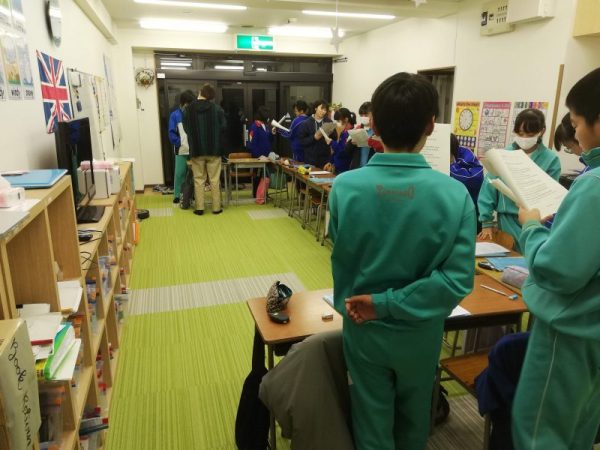
It’s all coming together. Or is it?
You can read previous Academy posts here:
- Extensive Reading for Secondary Students (April 2015)
- Six Months In (September 2015)
- Year One (February 2016)
- Looking at Year Two (March 2016)
- Stocktake (March 2016)
- Shadoku explained (April 2016)
- Some improvements to the curriculum (April 2016)
- December 2016 update (December 2016)
- Cambridge Academy: Year Two and Three (March 2017)
- Cambridge Academy: Stocktake 2017 (March 2017)
- Cambridge Academy: Another Quantum Leap (April 2017)
- Cambridge Academy: Year Three Mid-Year Update (August 2017)
- Cambridge Academy: Year Three Student Progress (October 2017)
- The Academy Fluency Course (March 2018)
- Cambridge Academy: Stocktake 2018 (March 2018)
This year was a solid one for the Academy but we definitely had some ups and downs.
Mistakes were made (by me)
Let’s start with the downs: we screwed up badly not just once but twice. The first mistake was getting a bit cocky about the Academy and changing the way we explained it to existing students.
In the past we’d gone into each class with 6th graders in, introduced the Academy and encouraged them to join. Almost everyone did.
Last year, we asked everyone to come to a special explanation session on a Sunday, then asked them to come in again in January and line up to sign up for the days they wanted. Only about half the students joined.
This is a mistake we’ll be paying for for the next five years, as we have a year that is quite a bit smaller than it should be. Looks like we’ll have 22 second-year students next year, spread over three classes of 4, 6, and 12 students. Doubly regrettable because the Academy classes work much better with at least ten students in.
This year we went back to the original, more humble model and right now halfway through the explanations pretty much all our 6th graders have signed up. If all goes well we should end up with 28 first-graders in three classes.
The second mistake was delegating too much. As planned I assigned a teacher to each class, but then failed to monitor them as closely as I should have (in my defence we had some pretty serious issues crop up this year that took a lot of time at first and then burned me out later).
As a direct consequence of me not paying enough attention to how the classes were going, the current first-year classes in particular are not where I want them to be, and all the reading classes have gone slightly off course.
Nothing too serious, but changes will be needed next year.
But lots of good things happened too
Despite the lack of attention from me, the classes mostly went well and students learned a lot. We did Eiken last month at the school, and 78 out of 82 students passed the paper test. Last weekend we did interview practice, and everyone was basically okay to pass. This is very encouraging, as our student body is very mixed and doesn’t just consist of elite students.
We wrote 2/3 of the A3 output course, and it turned out really well. I’m proud of all our materials, but this might be the best one yet. We also finished one year of the A5 advanced course.
Very few of our students quit. We lost a handful to graduation and three quit, but we’re hoping to have a healthy intake and we also had four students join from outside. Hopefully that is the start of a trend 🙂
Student numbers
Junior high school 1: 28? (still in the process of pitching to parents)
Junior high school 2: 22
Junior high school 3: 30
Senior high school entry class (1-2 year students): 10
Senior high school advanced class (2-3 year students): 11
Pretty encouraging. It will be interesting to see how many of the new JHS 3rd years stay on into high school, as they were our first big year.
Also, the mathematically gifted among you will notice that this would give us 101 students, finally reaching our longstanding goal of 100 students in the Academy. Eventually I am hoping we’ll have something like 200 in the program (see below for how this may be possible).
Future plans
We’re going to rent the third unit on the ground floor of our building. This will give us all the car parking spaces (an additional four) plus get rid of the grumpy guy that used to rent it so no one will be complaining about our students going forwards. This extra unit will give us about 280 new class places and allow us to have all junior high school levels of the Academy, plus one high school level, every weekday.
I’m going to be much more hands on with the reading classes next year, and with the junior high school first year output classes. This will allow me to develop them a bit more and address structural problems (as well as train our teachers).
I’m going to take another leaf out of SEG’s book and try to find supplementary reading material for our beginner levels. At the moment the students read sets of readers with CDs, but I would also like to mix in picture books and other reading material that they might find interesting. A big work in progress.
We’ll finish the A3 course and start working on our final level, A4. We’ll also write a second year of the A5 course. This will complete the Academy materials, at which point we might start working on a course for elementary school students.
Outlook
The outlook is good. I am not going to be able to be as hands-off next year as I was this year, but I think the program will get a lot stronger because of that.
We will be in a position to recruit hundreds of new students next year, including almost 100 new Academy students, so we will need to start working on advertising for April 2020 from now. It’s going to be intense but also kind of fun 🙂
conference curriculum extensive reading language courses university
by sendaiben
leave a comment
CLaSIC 2018
I enjoyed attending and presenting at the Eighth CLS International Conference in Singapore this week.
Thank you to everyone that attended my presentation and especially to those that asked questions or talked to me afterwards.
Here are my slides in PDF format:
Please feel free to leave a comment or contact me by email if you have any questions.
Academy curriculum junior high school language courses materials publications school management textbooks
by sendaiben
leave a comment
The Academy Fluency Course
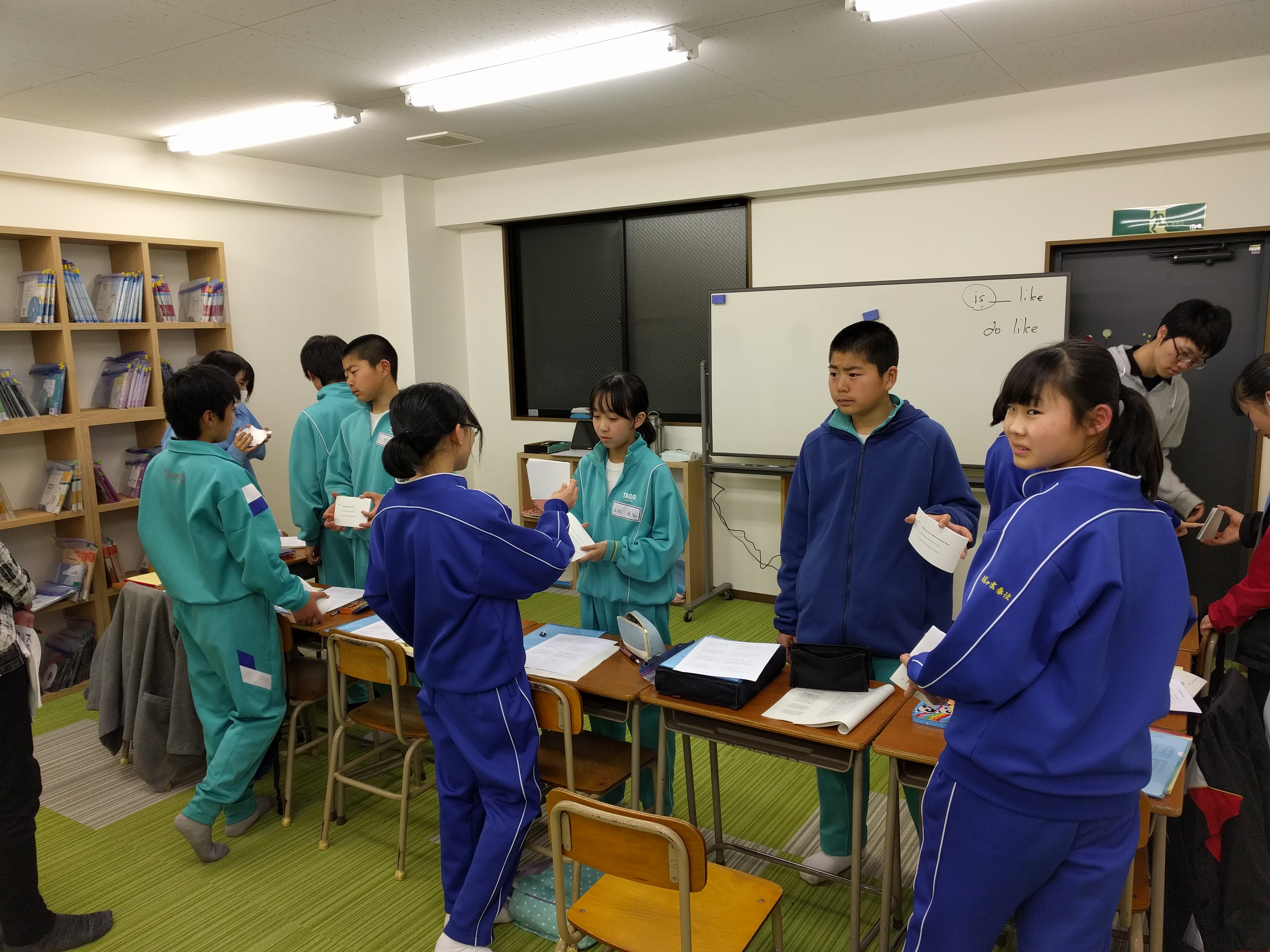
The Cambridge Academy is a six-year English program for junior and senior high school students at Cambridge English School in Sendai. You can read previous Academy posts here:
- Extensive Reading for Secondary Students (April 2015)
- Six Months In (September 2015)
- Year One (February 2016)
- Looking at Year Two (March 2016)
- Stocktake (March 2016)
- Shadoku explained (April 2016)
- Some improvements to the curriculum (April 2016)
- December 2016 update (December 2016)
- Cambridge Academy: Year Two and Three (March 2017)
- Cambridge Academy: Stocktake 2017 (March 2017)
- Cambridge Academy: Another Quantum Leap (April 2017)
- Cambridge Academy: Year Three Mid-Year Update (August 2017)
- Cambridge Academy: Year Three Student Progress (October 2017)
- Cambridge Academy: Year Three and Four (February 2018)
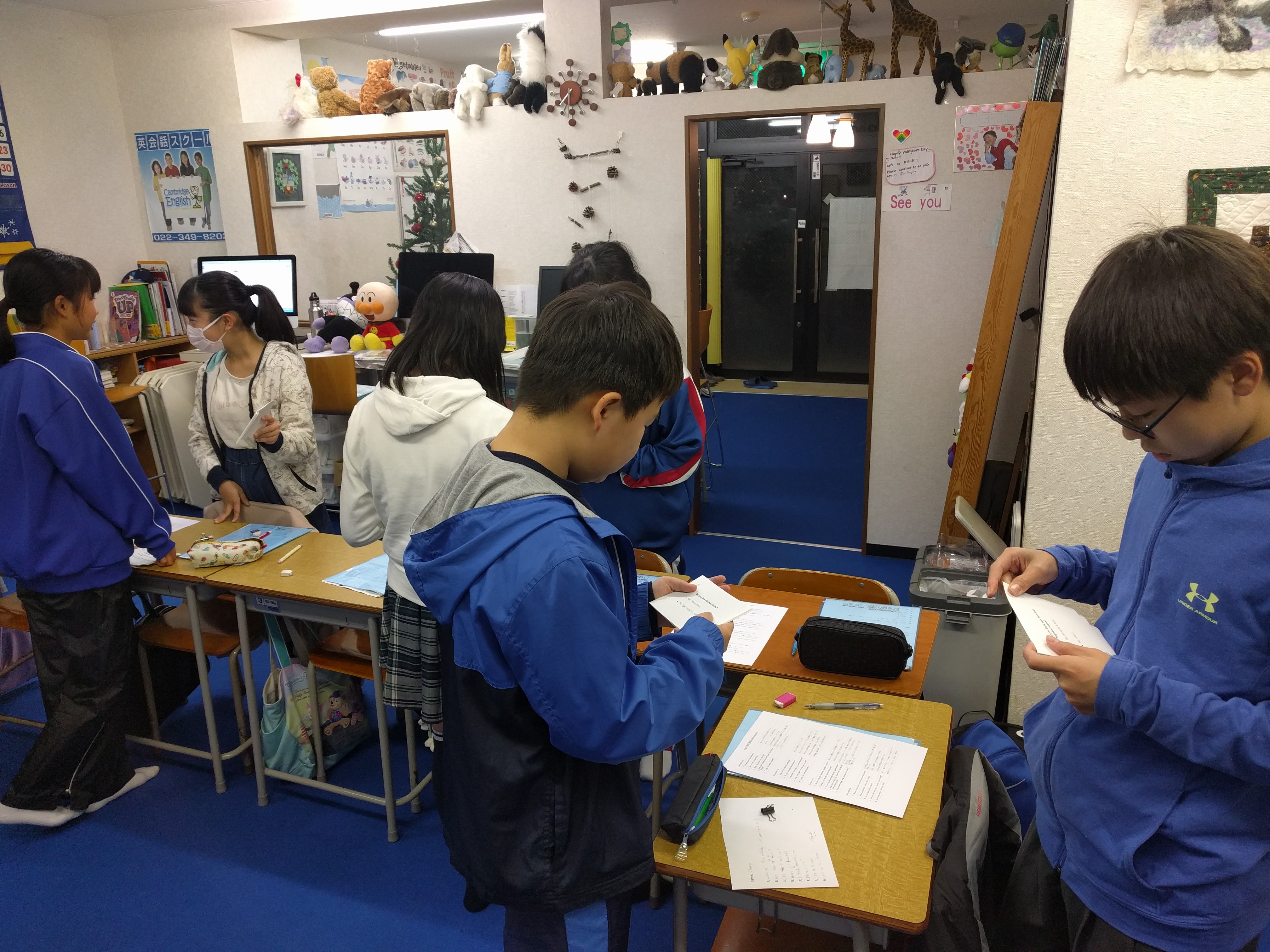
Background
The fluency course was not originally part of the Academy plan. Originally I wanted to run the Academy purely as an extensive reading course that would supplement what students were doing at school (and cram school/juku). This is much easier logistically and makes scheduling and running classes very simple. It’s also more profitable as you can fill classes with students of different levels.
This first iteration of the Academy did not work well. We found that without help it was difficult for students to learn English just from reading. We also found that students did not form a social bond with the school or their peers and thus missed out on motivation. Some students did well with the ER-only model, but many did not.
The second iteration of the Academy imitated SEG in having reading classes and communication classes. For the latter we used commercial textbooks. This worked better than ER-only, but there were problems with the tone, content, amount of material, and amount of repetition in the textbooks. The classes also worked well if run by an experienced engaged teacher but less well with less experienced teachers.
In order to deal with these problems, we created the Academy Fluency Course. It was written from scratch, extensively trialled with our classes here, and is designed to provide students with huge amounts of repetitive practice in reading, speaking, listening, and writing. Fluency is gained by repeating tasks you can already do, and the goal of the Fluency Course is not to teach students new language (although they do encounter huge amounts of new vocabulary and grammar in the course) but rather to allow them to practice enough to internalise some of the language they know and become fluent in using it.
The Cambridge Academy now consists of 140 minute classes: 20 minutes of workbook/school work/individual study, 60 minutes of input (extensive reading and listening), and 60 minutes of output (fluency course).
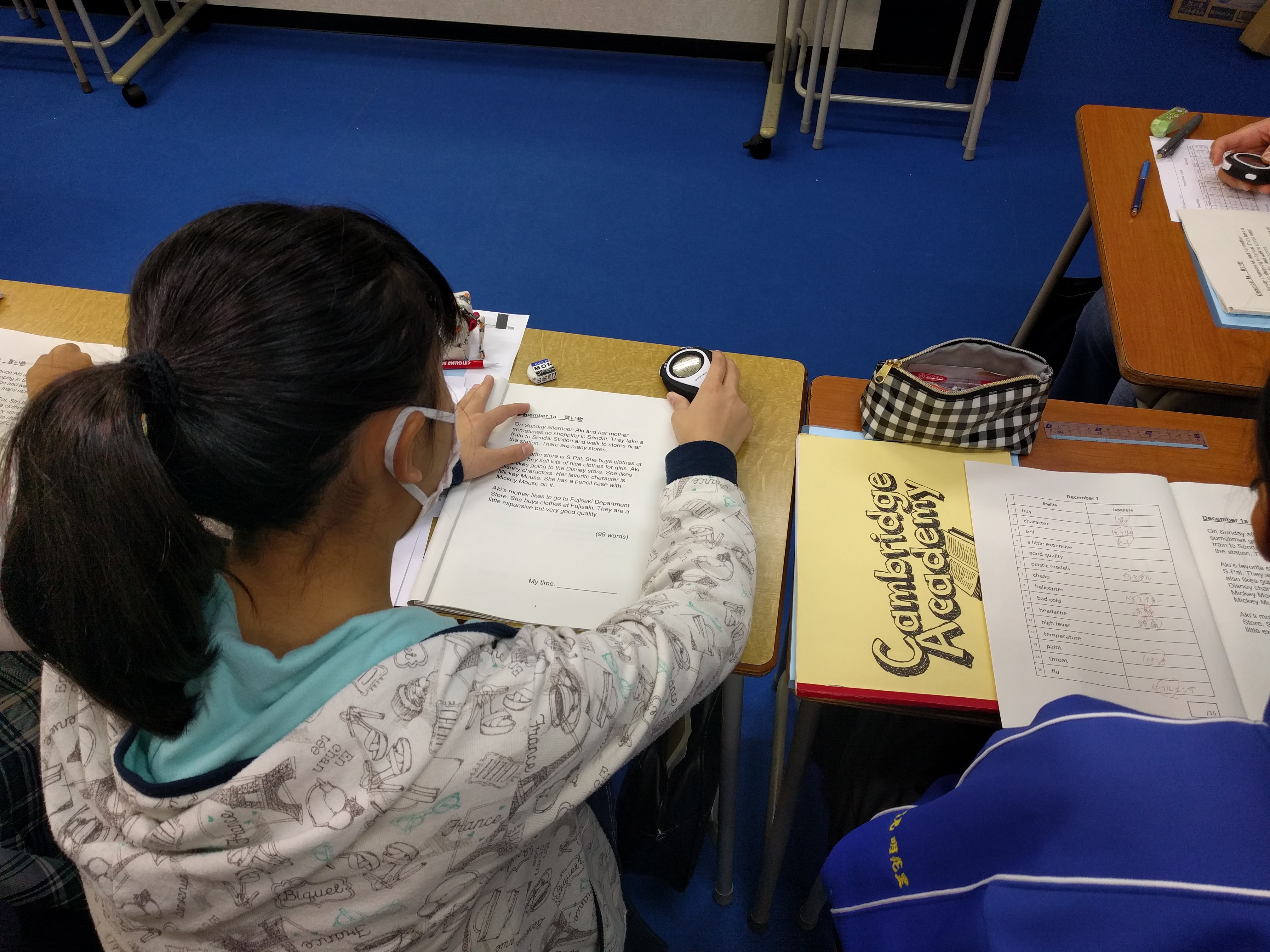
The Academy Fluency Course
Junior high school 1: Year One (these materials are in beta and are described in detail below).
The theme for this level is the students daily and school lives.
Junior high school 2: Year Two (these materials are in alpha).
The theme for this level is Japan. Students read and talk about different areas/aspects of Japan.
Junior high school 3: Year Three (these materials are not written yet).
The theme for this level is the world. Students read and talk about different areas/aspects of the world.
Senior high school initial course for first and weaker second years: (these materials are not written yet).
This level will provide a transition between the junior high school materials and the advanced course below.
Senior high school advanced course for stronger second and third years: (this is being written now).
This level is based on the PDR method and involves students reading, thinking, discussing, and writing about topics each week.
In 2017 we ran classes using the Year One materials. Halfway through the year we started writing the Year Two materials with the second and third graders. The plan is to write Year Three this year alongside the advanced high school course and to use them with the third year JHS and our advanced high school class.
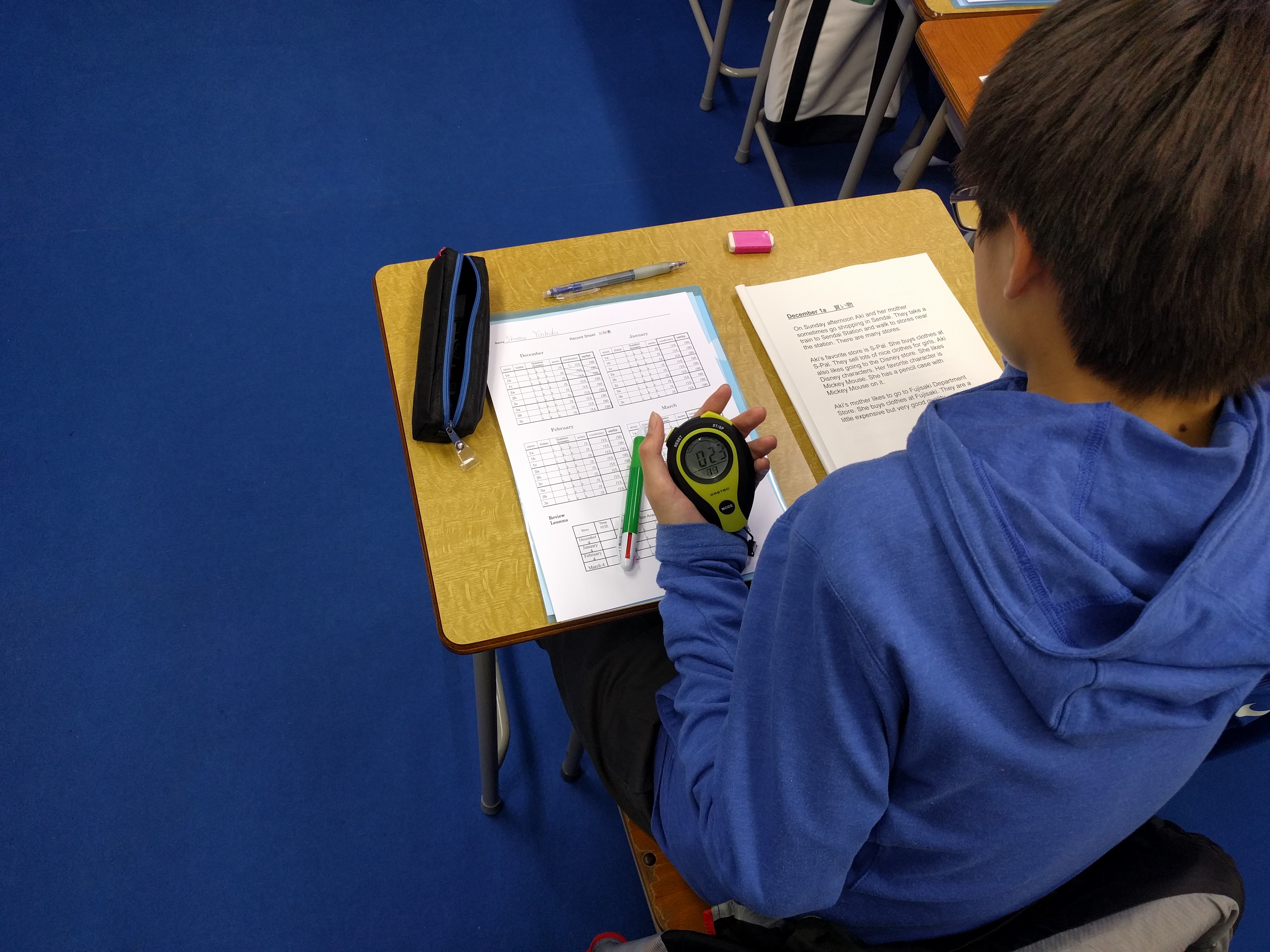
Fluency Course Year One
The first year of the Fluency Course is based on the first year junior high school textbooks and has the following student components:
- 12 4-week student textbooks (April to March) with a total of 512 pages and 84,249 words
- a 48-unit student writing workbook
- 12 monthly reference sheets with questions and vocabulary
- 3 4-month student record sheets
There are also reference/class/teacher components
- 240 index cards with questions and answers (you will need one set for every two students in the class for pair work)
- 48 verb exercise answer sheets (you will need one for each student in your largest class)
- 48 Quizlet vocabulary and question datasets (available through the Quizlet website)
The main component is the student textbook, split into twelve montly booklets. It provides the vocabulary and questions for all the other components. The April book is slightly different from the others because it provides a gentle introduction. Each book contains the following:
Week One and Two
Vocab quiz (15 items from the timed reading texts, previewed by Quizlet)
3 timed reading texts with questions (April 45 words, May-July 60 words, August-November 80 words, December-March 100 words)
Verb conjugation table (to be read aloud -one verb per week)
Timed verb translation (30 items)
Example dialogue for reading and memorizing (April-July 3 exchanges, August-November 4 exchanges, December-March 5 exchanges)
Week Three
No example dialogue. Instead students write their own (length as above).
April has example dialogue.
Week Four
Instead of three short timed readings, there is one reading with three times the word count.
Teacher corrects and chooses the best student dialogues, then prints them for students to practice with.
April has example dialogue.
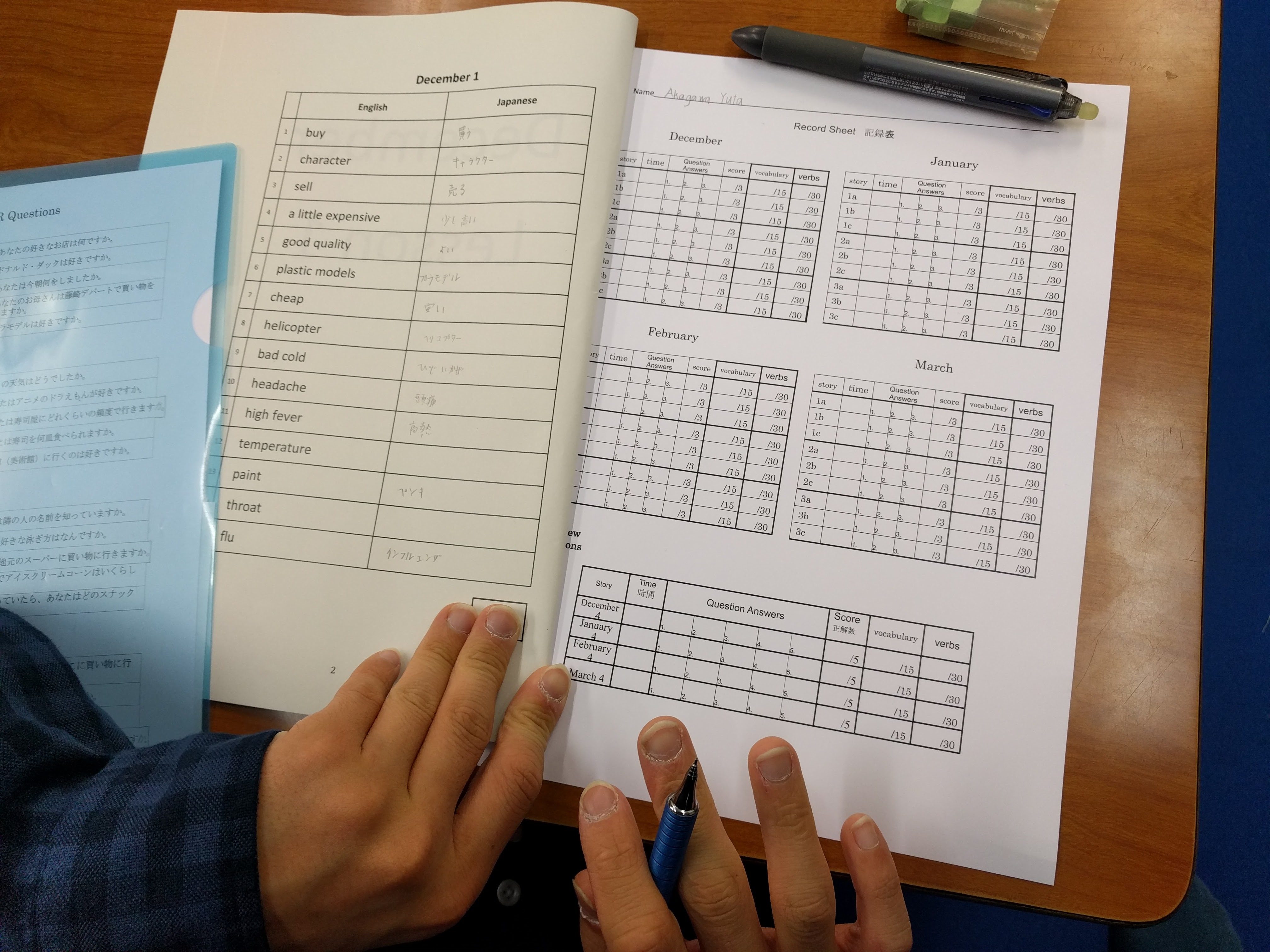
Results
The Fluency Course depends somewhat on the fact that students are also learning English at school. It is designed to cover the gaps in students learning, mainly speaking, reading, and writing exercises, and particularly drilling these.
So far results have been very encouraging. Our students are not all particularly academic or motivated, and it has been very encouraging to see all of them improve and succeed using the Fluency Course. More able/advanced students are able to challenge themselves within the course, while weaker ones can support themselves and keep up.
I will write a description of an output class in a future blog post.